
Google Maps Fake Listings & Reviews Lawsuit:
Google v. Ethan QiQi Hu et al.
On June 16, 2023, Google sued Ethan QiQi Hu, his two business, GMBEYE and Rafadigital LLC, and twenty other unnamed people listed as Does 1–20.
Google claimed breach of contract, violations of the United States Lanham Act section that prevents false advertising, 15 U.S.C. § 1125(a)(1)(b), and violations of California Business and Professions Code, section 17200, which prohibits any unlawful, unfair, or fraudulent business act or practice and unfair, deceptive, untrue, or misleading advertising.
The lawsuit claims that the defendants helped small business owners by engaging in fraud to get Google Maps listings:
Defendants’ offerings of Business Profile verification, preferred placement in Google Search results, and lead sales violate their contracts with Google and the law. Their unlawful scheme has three principal components: (1) fraudulent verification of nonexistent Business Profiles, (2) posting fake reviews on Business Profiles, and (3) selling real businesses leads from unsuspecting customers who seek services from the businesses listed on Defendants’ fake Business Profiles.
The lawsuit seeks to prohibit Defendants from continuing these services and awarding damages and attorney’s fees to Google.
Complaint
-
Plaintiff Google LLC (“Google”), by and through its attorneys of record, brings this action against Defendants Ethan QiQi Hu; GMBEye; Rafadigital, LLC (“Rafadigital”); and Does 1– 20 to stop Defendants’ complex and misleading scheme to deceive consumers, business owners, and Google by unlawfully manipulating Google’s industry-leading business listing services.
-
Over the past two years, Defendants—led primarily by a single individual, Ethan Qiqi Hu—have abused Google products to create fake online listings for businesses that do not exist, and to bolster them with fake reviews from people who do not exist. Defendants sell these listings, and the inquiries from confused consumers who are lured in by them, to individuals and entities looking to promote their businesses on Google platforms. Defendants deceive these small business owners too, making unsubstantiated and impossible claims about their ability to guarantee a favorable position in Google’s search results and implying preferential treatment or access with respect to certain Google processes.
-
Google brings this action to put an end to Defendants’ fraudulent conduct and the ongoing harm Defendants are causing to Google, Google users, and business owners.
PARTIES
- Google LLC is a limited liability company organized under the laws of the state of Delaware with its principal place of business located at 1600 Amphitheatre Parkway, Mountain View, California 94043.
- Defendant Ethan QiQi Hu is an individual who resides in or near Los Angeles, California.
- Defendant GMBEye is a business entity of unknown form. According to its website, www.gmbeye.com, GMBEye’s principal place of business is in Los Angeles, California, with ZIP code 90029. Google is informed and believes, and on that basis alleges, that GMBEye is not a resident of any other state within the United States. Mr. Hu is identified on GMBEye’s website as GMBEye’s “[o]wner,” and on information and belief, Mr. Hu is GMBEye’s principal or sole officer and employee and he operates GMBEye from its principal place of business in or near Los Angeles, California.

- Defendant Rafadigital is a limited liability company organized under the laws of the state of Mississippi. Mr. Hu is listed as Rafadigital’s registered agent and manager in its filings with the Mississippi Secretary of State and as the “[o]wner” of Rafadigital on its website, Rafadigital.com.On information and belief, Mr. Hu is Rafadigital’s principal officer and employee as well as its owner, and he operates Rafadigital from the company’s principal place of business in or near Los Angeles, California.

- Google does not know the true names and capacities of those defendants sued as Does 1–20 (the “Doe Defendants”) and therefore sues them under fictitious names. On information and belief, some or all of the Doe Defendants are individuals or entities that post fraudulent reviews using Google products at the direction of other Defendants. Google will amend this Complaint to allege the true names and capacities of these Doe Defendants if and when they are ascertained.
JURISDICTION, VENUE, AND DIVISIONAL ASSIGNMENT
- This Court has subject matter jurisdiction pursuant to 28 U.S.C. § 1331 and 15 U.S.C. § 1121, as this is a civil action arising under the federal Lanham Act, as amended, 15 U.S.C. § 1051 et seq. (the “Lanham Act”). The Court has supplemental jurisdiction over all other claims pursuant to 28 U.S.C. § 1367 because all claims herein form part of the same case or controversy under Article III of the United States Constitution.
- This Court has personal jurisdiction over Defendants because each Defendant is a resident and citizen of California, where this Court is located, and further because each Defendant consented to the jurisdiction of the federal or state courts of Santa Clara County, California, by agreeing to Google’s Terms of Service and the choice of venue provision therein, as discussed in more detail below.
- Venue is proper in this District under 28 U.S.C. § 1391(b)(2) and a substantial part of the events or omissions giving rise to the claims occurred in this District, including the harm that Defendants caused Google and other individuals and entities in this District. In addition, Defendants consented to venue in this District by agreeing to Google’s Terms of Service and the choice of venue provision therein, as discussed in more detail below.
- This action is properly assigned to the San Jose Division of this District under Civil Local Rule 3-2(c) because Plaintiff Google is headquartered in Santa Clara County, which is served by the San Jose Division.
GOOGLE’S BUSINESS PROFILE AND GOOGLE MY BUSINESS SERVICES
-
Among its other services, Google offers a search engine, Google Search, and a mapping tool, Google Maps. Both Search and Maps contain “Business Profiles” with details of businesses, service providers, and other places of interest. Business Profiles span an enormous variety of businesses and professionals: restaurants, car mechanics, accountants, plumbers, dentists, hair salons, law firms, government agencies, contractors, retail stores, amusement parks, and many other kinds of goods or service providers.
-
With Search and Maps, users can explore and search for businesses in a given area. The resulting Business Profiles display certain information about a business, including its street address, hours, website, phone number, and so on. Business Profiles also display user-submitted reviews of the associated business. It is important to consumers that this information be authentic and accurate. Likewise, because consumers often use Business Profiles and user-submitted reviews to identify businesses and decide which ones to patronize, many business owners—and especially small business owners—find Business Profiles important for attracting and maintaining customers.
-
For several years, Google has offered businesses a suite of free tools to manage their Business Profiles. These tools were previously known as Google My Business, and some users adopted that term to refer to individual Business Profiles as well (as in, for example, “Our business’s phone number and website appear on our GMB.”). Google changed the Google My Business name to Google Business Profile in late 2021, though many businesses and consumers continue to refer to Google My Business or “GMB.”
-
New Business Profiles may be created by businesses themselves, automatically created by Google, or suggested by members of the public. To create a new Business Profile or claim an existing Business Profile, a person must verify basic details about the business and that they are the business’s owner or other authorized representative. Following this verification process, the person becomes the profile’s “owner” and may edit that Business Profile, grant other users access to do so, and use various other tools and features. For instance, verified business owners and their authorized representatives can update their hours, address, or website, and they can add photos or promotional offers.
-
Google offers businesses and their owners a variety of options to complete the verification process. Many businesses verify their addresses by requesting a postcard with a verification code that Google sends to their physical location. Some merchants, including those that operate within a given service area and not from a single physical location at which they can receive a postcard, may be able to verify their listing through other methods. These include, for example, receiving a phone call or conducting a video call with a Google employee, during which the business can confirm its legitimacy by displaying identifying features like sales inventory, tools of the trade, or a physical storefront.
DEFENDANTS’ ADVERTISEMENTS AND FALSE CLAIMS
-
On their websites and on social media, Defendants purport to offer various search engine optimization and related services concerning Google Business Profile and Google My Business.
-
GMBEye’s website, GMBEye.com, advertises just one type of service: “Premium Business Listing Verification” on Google. GMBEye.com’s homepage, shown below, prominently displays such an advertisement.

-
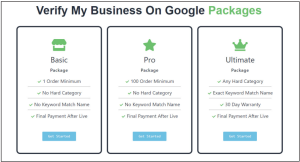
GMBEye expressly advertises that it can “[v]erify Google Business Without Postcard For All services” and “categories.” Through GMBEye’s website, Defendants solicit merchants and collect their information, such as their names, email addresses, business names, business websites, what each merchant “hop[es] to achieve with a new GMB,” and what the customer’s business goals are. GMBEye offers customers various packages of verification services, ranging from a “Basic” package to the “Ultimate” package.
-
GMBEye expressly advertises that it can “[v]erify Google Business Without Postcard For All services” and “categories.” 1Through GMBEye’s website, Defendants solicit merchants and collect their information, such as their names, email addresses, business names, business websites, what each merchant “hop[es] to achieve with a new GMB,” and what the customer’s business goals are. GMBEye offers customers various packages of verification services, ranging from a “Basic” package to the “Ultimate” package.2 The packages—and GMBEye’s fees—appear subject to change depending on the number of Business Profiles a buyer seeks to verify and, presumably, the degree of effort involved for GMBEye to evade Google’s verification requirements. For example, the “Basic” and “Pro” packages encompass orders that are not in what Defendants term a “Hard Category.”3
-
GMBEye is replete with express and implied assurances that Defendants are able to bypass the verification procedures that Google requires of most merchants, and also to ensure a particular business listing is “at the top” of Google Search results—a misleading and false statement, for no business or entity can guarantee such placement by Google’s Search algorithm.
-
Much of Defendants’ messaging suggests that GMBEye has preferential access to Google or is otherwise uniquely positioned with respect to Google, allowing it to secure the “Premium Business Listing Verification” that is unavailable to those who verify their businesses through Google’s free processes. The implied message is that, due to this access or relationship, GMBEye can “Fast Track Your Business Verification on Google,” according to the call-to-action at the top of its homepage. The website also claims that GMBEye is the only service that “can [provide a] 30 day guarantee [for verification in] all categories—including the notorious locksmith and garage repairs!”4
-
Some merchants are likely drawn to GMBEye’s promises of “[f]ast [t]rack,” “[p]remier” verification in any category, unavailable to those who use Google’s free verification procedures. GMBEye’s customers and prospective customers likely include both legitimate merchants seeking a shortcut through Google’s procedures, as well as other scammers or bad actors who abuse fake business listings; while the latter may quickly recognize GMBEye as a fellow scammer, the former may not.
-
Elsewhere on the GMBEye website, in smaller chunks of narrative text, Defendants explain that GMBEye’s unique position relies on “a proprietary process” through which it can “immediately establish trust with Google, while other GMB methods try to ‘game the system.’” These messages start to suggest that GMBEye has some special access to or knowledge of Google’s procedures, rather than enjoying “fast track” permission or “premier” access granted by Google. But the explanation nonetheless relies on GMBEye’s having a level of “trust with Google,” however obtained, such that GMBEye does not need to “game the system.” Defendants do not, in fact, have any preferential relationship with or access to Google to facilitate such services.
-
Further explanation on the GMBEye website boasts that Defendants can even verify businesses “with [s]pammy names,” suggesting the service avoids Google’s measures to maintain accurate and high-quality Business Profiles. Defendants similarly claim that “[m]ost verification methods cant [sic] handle that because Google will suspend your listing but with our method you can sustainability rank your GMBs with Spammy names helping you rank on Google in no time!”5
-
Other claims suggest, falsely, that GMBEye can assure a business top position in Google Search. “Having your GMB name include the keyword you are ranking for it[ i]s one of the best way[s] to [be] on top of google rankings . . . . [O]ur method makes it possible to have the exact keyword you are ranking for in the GMB name, which hits all the Google Algorithm for a top ranking GMB.”6
-
Notwithstanding these other services it purports to offer, GMBEye’s advertisements and representations emphasize its unique position with respect to verification: “We are the only provider tha[t] can provide GMB listing for any US/CA location in any category.”7
-
Rafadigital advertises somewhat different services than GMBEye, focusing on search engine optimization and lead generation, but still with a focus on Google Search and Maps. “Elevate to the Top of Google” was, until recently, featured in large, prominent font in the center of its homepage.
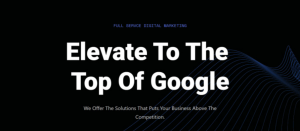 In a video embedded on Rafadigital’s website, Ragadigital describes itself as “an A-list SEO agency that specializes in Google ranking.” As part of its services, Rafadigital claims to “improve your maps listing by completing GMB profiles, claiming missing listings, encouraging reviews, and standardizing NAP [i.e., name, address, and phone number].”8 Rafadigital’s advertising makes dramatic and unachievable promises, such as that Defendants will ensure that a website “shows up #1 on Google” and that “[w]e rank your business on Google My Business (GMB) to be #1 on map searches so you can out-perform local competitors.”9
 -
Rafadigital’s website also advertises the company as specializing in “lead generation,” a marketing process that identifies and obtains contact information for potential customers, known as “leads,” that a business can then pursue in hopes of making a sale. Rafadigital claims that it can “[g]et high converting leads direct to your phone” “for all industries[.]”10
-
As recently as mid-2022, if a user clicked on a button on Rafadigital.com for more information about “GMB Verification,” the site would redirect them to GMBEye.com, confirming (along with Mr. Hu’s appearance on both websites) that Rafadigital and GMBEye are closely related.11
-
Concerned by Defendants’ advertisements and apparent sale of fraudulent verification services, Google began to investigate their practices. Upon information and belief, since mid-2021, Defendants have been continuously misleading Google users, making impossible claims to their clients, and engaging in conduct that violates state and federal law and the contractual obligations found in Google’s Terms of Service.
-
Defendants’ offerings of Business Profile verification, preferred placement in Google Search results, and lead sales violate their contracts with Google and the law. Their unlawful scheme has three principal components: (1) fraudulent verification of nonexistent Business Profiles, (2) posting fake reviews on Business Profiles, and (3) selling real businesses leads from unsuspecting customers who seek services from the businesses listed on Defendants’ fake Business Profiles.
DEFENDANTS’ FRAUDULENT BUSINESS PROFILE VERIFICATION SCHEME
- As noted above, Defendants advertise and sell fraudulently verified Business Profiles for their own illicit gain by manipulating and abusing Google’s Business Profile tools and verification services.
- To do so, Defendants first create a Business Profile for a fake business, generally accompanied by a fake website based on a simple template. Defendants typically associate these fake businesses with Voice over Internet Protocol (“VoIP”) phone numbers whose area codes correspond to the fake businesses’ supposed locations.
- Upon information and belief, Defendants have been associated with over 350 fake Business Profiles listings since mid-2021. Posing as a fake business’s owners, Defendants contact Google, seeking verification. Defendants frequently verify their fake listings through video calls with Google, as shown in the image below, taken from a June 23, 2021 video call with Google during which Mr. Hu purported to be associated with a nonexistent chiropractor, Wilmington Chiro Health.
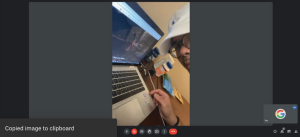
- Defendants come to these calls armed with an elaborate set of props, which they use to pass off their fake listings as real small businesses.
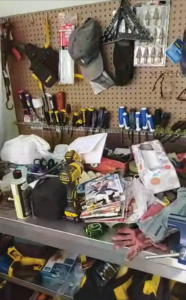
- For example, on March 14, 2022, Defendants contacted Google to verify “Western Los Angeles Garage Door Repair.” The individual masquerading as the business owner, who supposedly serviced Los Angeles, California, showed the Google agent a tool bench area to mislead Google into believing they were at their business location, a portion of which appears below:
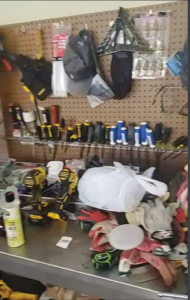
- When Defendants sought to verify “Pro Tree Service” in Houston, Texas, on March 22, 2022, they presented the same tool bench to Google to verify that fake listing:

- The same area appeared again for “AS Budget Plumbers,” purportedly based in Davis, California, when Defendants contacted Google to verify that fake listing on March 29, 2022:
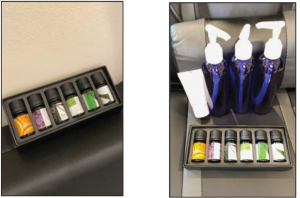
- As another example, Defendants have presented to Google what appears to be the same set of essential oils below in order to verify multiple aromatherapy and reiki therapy listings.
- Once Defendants successfully verify these dummy Business Profiles, they proceed to either sell the listing or modify the fake business’s information to make the Business Profile more desirable to potential buyers. At times, Defendants transfer control of fraudulently-verified Business Profiles, updated to include an unverified real-world business’s business information, to their buyers.
- Google has detected over a hundred such fraudulent revisions to the content of Defendants’ fake Business Profiles. To give just a few illustrative examples:
a. Using the props above, Defendants verified the Business Profile for “Envy Hot Stone Reikeist,” a fake reiki provider supposedly located in Davis, California. Twenty-two days later, they modified the listing to reflect a completely different business: “Rapid Plumber,” also in Davis.
b. Defendants created a Business Profile for “Santa Barbara Maid Service & House Cleaners,” a fake housekeeping service in Santa Barbara, California, and 42 days later changed it to “Gold Garage Door Repair,” also supposedly located in Santa Barbara.
c. Defendants created a Business Profile for “Baltimore Spa Paradise,” a nonexistent massage spa in Baltimore, Maryland. After verifying this listing, Defendants transferred it to a new business, “1st Painters in Baltimore,” 30 days later, preserving the Business Profile associated with Baltimore Spa Paradise but with a new name and website, 1stpaintersinbaltimore.com.
d. Defendants transformed a fake chiropractor in Wilmington, North Carolina, into “Pro Painters Wilmington NC,” whose website, propainterswilmingtonnc.com, is virtually identical to the website for 1st Painters in Baltimore. Just eleven days elapsed before this supposed chiropractor became a painter instead.
- In addition to selling these fake listings to GMBEye’s clients, Defendants sell them to other parties by other means. For example, Mr. Hu posted the below offer to sell a Business Listing in a Facebook group called “Rank and Rent – GMB Strategy & Domination,” claiming that his listing for a “Plumbing GMB + Website” in Monterey, California, had received “~40 calls and 5 form submissions” in the prior month—presumably from residents of the Monterey area who were seeking assistance with a plumbing issue.
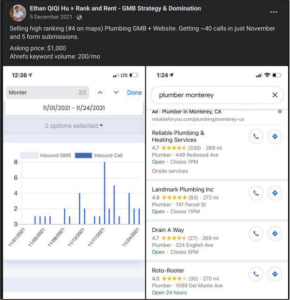 Mr. Hu—who admits in his biography on GMBEye.com to “renting out GMBs” and “selling GMBs”—sought $1,000 for this nonexistent business’s Business Profile.
DEFENDANTS’ FRAUDULENT BUSINESS PROFILE REVIEW SCHEME
- To further bolster their fake listings’ illusions of legitimacy and credibility, and as an added service to their buyers, Defendants cause fake reviews to be posted to their fraudulent Business Profiles and those transferred to their clients.
- Upon information and belief, Defendants are connected to a network of over 350 fraudulent Business Profiles that involve at least 14,000 fake reviews. While these reviews were purportedly authored by individual consumers who visited the businesses associated with these Business Profiles, that is clearly not the case. Nearly all of the listings had their name, website, or phone number modified within weeks of verification, as described above. Nearly all of the reviews awarded five out of a potential five stars. And a majority of these reviews—including the at least 14,000 reviews noted above—were posted by two actors located in Bangladesh and Vietnam, an ocean away from the many purported U.S. businesses for which these accounts posted reviews.
- On information and belief, Defendants engaged the unknown person or persons associated with these two Google accounts and others to post these fake reviews. Defendants stood to gain from such reviews, which make their false Business Profiles more attractive to users and their potential customers.
- On information and belief, Defendants sell similar fake review posting services to their clients. In addition to obtaining reviews of their own fake businesses, Defendants will, for a fee, arrange for Defendants’ agents or other third parties to post fake positive reviews of their clients’ real businesses. Google is informed and believes, and based thereon alleges, that the persons who post these reviews have never patronized the businesses in question and that their reviews are not based on any real experiences.
DEFENDANTS’ FRAUDULENT BUSINESS PROFILE LEAD GENERATION SCHEME
-
While Defendants are waiting to sell or transfer their fraudulently verified and well-reviewed Business Profiles, those profiles remain live on Google, luring in unsuspecting consumers. Google users searching for businesses that suit their needs on Search or Maps find these Business Profiles and their websites, and—likely relying on Defendants’ fake reviews—call the VoIP phone numbers or submit online inquiries with their contact information.
-
Defendants then sell information about these potential consumers as “leads” to real-world businesses that actually provide the services the consumers were seeking. The consumers believe that they are contacting a particular business that they have chosen based on its Business Profile, reviews, website, proximity to their location, or other features. But they end up being sent to a different business altogether—one they did not choose and by whom they did not consent to be contacted. This behavior misleads consumers and is likely to erode their trust in Business Profiles on Google as a reliable and safe way to find and contact local businesses.
-
An example provides a helpful illustration of how Defendants’ scheme plays out in practice to misleading consumers and harm Google’s reputation. Imagine a resident of Los Angeles who arrives home to find that her garage door will not open. She searches for a nearby garage repair service on Google. She finds the fake listing discussed above, “Western Los Angeles Garage Door Repair.” Due to Defendants’ scheme, the listing is verified, so it contains photographs, a link to a website, and information about the business’s hours and service area. Seeing the strong five-star reviews by others for Western Los Angeles Garage Door Repair—and growing increasingly frustrated with sitting in her driveway—the user calls the phone number on the Business Profile, whose “213” Los Angeles area code provides further assurance that the business is located nearby. But when she places the call, she is not connected to the business she reasonably believes she thought she was calling (which, of course, does not exist) but to a different repair service that has agreed to pay Defendants a kickback for redirecting consumers their way.
-
Defendants make no secret of this scheme. In addition to proudly offering “lead generation” services through Rafadigital, Defendants have solicited businesses through other channels. For example, Mr. Hu authored the below post in a Facebook group for people seeking work in the Dallas-Fort Worth area, claiming to “get a lot of calls for plumbing jobs” and offering to “sub contract” that work to a “local plumber” in exchange for “a 10% cut”:

DEFENDANTS’ VIOLATIONS OF GOOGLE’S TERMS OF SERVICE
- In order to create or claim a Business Profile on Google, users must either create or use an existing Google account. By creating an account on Google, each user expressly agrees to Google’s Terms of Service (“TOS”).12
- The TOS provides that “all disputes arising out of or relating to these terms . . . will be resolved will be resolved exclusively in the federal or state courts of Santa Clara County, California, USA, and [the user] and Google consent to personal jurisdiction in those courts.”
- The TOS incorporates “service-specific additional terms.” These “services” include Google Business Profile and Maps, each of which has a separate set of terms of service. As relevant here, the Google Business Profile Additional Terms of Service (“GBP TOS”), Google Business Profile policies and guidelines (the “GBP Policies”), and Google Maps Policies are all incorporated by reference into the TOS. To use Google Business Profile as a merchant, as Defendants do when creating, verifying, or editing a Business Profile, a user must reconfirm acceptance of the GBP TOS by proceeding through an enrollment process that states “[b]y clicking proceed you accept Google Business Profile Additional Terms of Service.”
- By exploiting Google’s verification process to create, verify, and post reviews on fake Business Profiles, Defendants violate the GBP TOS, the GBP Policies, and the Google Maps Policies.13
- At all relevant times, the GBP TOS has provided that, in order “[t]o qualify for a Business Profile on Google, a business must make in-person contact with customers during its stated hours” and that “lead generation agents or companies” may not create Business Profiles.14 The GBP Policies further mandate that users “be upfront and honest about the information provided” and “not provide inaccurate or false information about [their] business or the services and products offered.”15 Business Profile users must also “accurately represent their business name . . . as used consistently on [their] storefront, website, stationery, and as known to customers.”16
- More generally, the GBP Policies reiterate that “[f]raudulent or illegal activities aren’t tolerated on Google[.]”17 Equivalent terms, with slightly different phrasing, appeared in the versions of these policies that governed Google My Business during all relevant periods.
- Defendants’ business models and practices violate all of these provisions. Defendants create and verify dummy Business Profiles for businesses that do not actually exist, much less “make in-person contact with customers.” Defendants thus “provide inaccurate or false information” and are not “upfront and honest about the information provided.”
- Indeed, the primary purpose of these Business Profiles is to verify other businesses, and such fake verifications constitute “fraudulent” conduct in violation of the GBP Policies. Defendants’ business model thus violates the GBP Policies for “representing your business on Google,” which state that “[o]nly business owners or authorized representatives may verify and manage their business information on a Business Profile.”18
- Defendants also flout the requirement in the GBP Policies that a Business Profile reflect a business’s real name, claiming that GMBEye can circumvent Google’s protections against including keywords in a customer’s business name:
Having your GMB name include the keyword you are ranking for is one
of the best way to on the top of google rankings. [sic] That is exactly
why it [is] against Google’s policy to have a keyword embedded name!
However, our method makes it possible to have the exact keyword you
are ranking for in the GMB name, which hits all the Google
Algorithm for a top ranking GMB. For example, if you are ranking for
Roofing in Houston, you will want the words “Roofing Houston TX” in
your GMB name. Most verification methods can[’]t handle that because
Google will suspend your listing but with our method you can
sustainability rank your GMBs with Spammy names helping you rank
on Google in no time!19
- Defendants have also breached provisions in the GBP Policies that regulate the behavior of third parties who, like Defendants, administer or purport to administer Business Profiles that they do not own. For example, the GBP Policies prohibit “[d]eceptive behavior,” such as claims “[g]uaranteeing placement on Google.”20 Indeed, Google is explicit that “[i]t’s not possible for third parties to influence the order in which your business appears on Google Search or Maps.”21 Despite this, GMBEye’s website makes multiple claims to this effect, including statements such as: “[O]ur method makes it possible to have the exact keyword you are ranking for in the GMB name, which hits all the Google Algorithm for a top ranking GMB.”22 GMBEye also claims that the “GMBEye Instant Verification” method has a “100% success rate.”23 Rafadigital similarly makes impossible claims, such as that it will “rank your business on Google My Business (GMB) to be #1 on map searches” and ensure that a website “shows up #1 on Google Search.”24 Until recently, Rafadigital’s website made another, similar claim: “We Will Make Your Store #1 on Google.”
- The GBP Policies further require entities that provide Business Profile administration services to “share the ‘Working with a third party’ disclosure notice with all of their customers,”25 including in a prominent location on their websites, but that notice does not appear on either GMBEye.com or Rafadigital.com.
- To the extent Defendants’ Business Profiles are associated with any kind of legitimate businesses, they serve as “lead generation agents,” who are not permitted to use Google Business Profile, and are therefore in violation of the GBP TOS.26
- Additionally, Defendants violate the Google Maps User Contributed Content Policy (the “Maps UGC Policy”), which is incorporated by reference into Google’s TOS. The Maps UGC Policy expressly prohibits posting fake reviews by proscribing “[f]ake engagement,” defined as “content that does not represent a genuine experience,” and including “[c]ontent that is not based on a real experience and does not accurately represent the location or product in question.”27 These policies reflect that Google “go[es] to great lengths to make sure content published by our users is helpful and reflects the real world.”28
- Defendants post or arrange for the posting of this kind of fake engagement on their dummy Business Profiles and sell fake reviews in direct communications with their clients to build Business Profiles’ credibility. Accordingly, Defendants breached the Maps UGC Policy by posting, directly or through their agents, deliberately fake content, not based on real experiences and information, on Google Maps.
- Due to Defendants’ actions, Google is forced to expend substantial time and resources conducting investigations to identify and disable accounts and Business Profiles implicated in Defendants’ scheme.
- On information and belief, many consumers and businesses believe that Google is not doing enough to prevent Defendants’ fraudulent conduct, and that Google profits from such conduct. As a result, they blame Google for allowing Defendants’ fraudulent conduct, causing harm to Google and its business.
- On information and belief, by disrupting Business Profiles, Search, and Maps with false and misleading information, Defendants’ conduct has undermined Google’s credibility and caused some consumers and businesses to avoid using Google’s mapping services, all to the detriment of Google and its business.
COUNT I: BREACH OF CONTRACT
-
Google realleges and incorporates by reference the allegations of each and every one of the preceding paragraphs as though fully set forth herein.
-
Defendants entered into binding and enforceable contracts with Google by expressly agreeing to Google’s TOS, as set forth above.
-
Google has fully performed its obligations under the TOS.
-
Defendants breached their contractual obligations under the TOS in a number of ways, including by creating Business Profiles for businesses that do not exist, attaching phone numbers to Business Profiles that are not associated with those businesses, providing false information to Google in connection with Business Profiles, using Business Profiles to generate leads and selling said leads to third parties, failing to comply with Google’s rules for working with third parties, and posting or causing to be posted on Google services deliberately fake reviews not based on real experiences.
-
As set forth above, as a result of Defendants’ breach of the TOS, Defendants have caused Google to be damaged in an amount to be determined at trial, including by forcing Google to incur expenses to investigate and address Defendants’ breach.
COUNT II: VIOLATION OF CAL. BUS. & PROF. CODE § 17200, et seq.
- Google realleges and incorporates by reference all preceding paragraphs as if fully set forth herein.
- Defendants’ sale and authorship of fake Google Maps reviews is contrary to the Federal Trade Commission’s (“FTC”) regulations governing the use of endorsements and testimonials. Those rules require that endorsements “reflect the honest opinions, findings, beliefs, or experience of the endorser” and prohibit “any express or implied representation that would be deceptive if made directly by the advertiser.” 16 C.F.R. § 255.1(a). Defendants violate this provision by posting and causing to be posted reviews of businesses they have never patronized and whose products and services they have never experienced, all while falsely and deceptively implying to readers that they have.
- Violation of FTC regulations is an unlawful business practice under California’s Unfair Competition Law (“UCL”), Cal. Civ. Code § 17200.
- Defendants’ unlawful business practices have directly resulted in economic harm to Google, including the costs of Google’s investigation into those practices.
- Absent an injunction prohibiting these unlawful business practices, Defendants are likely to continue posting fake reviews in violation of FTC regulations and the UCL, including by creating or using new and different Google accounts to evade Google’s attempts to detect and prohibit Defendants’ fake reviews. Google faces irreparable harm from the ongoing impact of such fake reviews on Google’s credibility, goodwill, and user experience.
COUNT III: FALSE ADVERTISING (15 U.S.C. § 1125(a)(1)(B))
-
Google realleges and incorporates by reference all preceding paragraphs as if fully set forth herein.
-
Defendants have made material, false and misleading representations of fact in commercial advertisements about the nature, characteristics, and qualities of Defendants’ services and Google’s products and services, including statements such as those described above that Defendants can “guarantee” “GMB listing for any US/CA location in any category,” that “We Will Make Your Store #1 on Google,” and that they enable Business Profiles “to have the exact keyword you are ranking for in the GMB name, which hits all the Google Algorithm for a top ranking GMB.” These false and misleading statements have deceived and/or are likely to deceive a substantive segment of the buying public.
-
Defendants also claim that their process “immediately establish[es] trust,” and made similar express or implied statements outlined in Paragraphs 22-28. Such statements undermine Google’s measures to ensure the integrity of its platform and are also likely to lead merchants to use Defendants’ verification services rather than verify with Google in accordance with its terms.
-
Defendants’ fake reviews are also misleading, as they purport to represent the actual experiences of consumers with a reviewed business, and imply that each reviewed business is a real business.
-
Because businesses and users rely on accurate Google Business Profile information, including reviews to attract and patronize businesses, such fake reviews and verification claims are likely to harm goodwill in and the reputation of Google’s services.
-
Defendants have made such statements in commercial advertising or promotion in interstate commerce, namely, on Defendants’ websites and in Business Profiles.
-
Defendants’ false and misleading claims are material to consumers because the claims are likely to induce consumers to purchase Defendants’ services by causing consumers to believe that Defendants are capable of guaranteeing verification, positive search engine placement, and other outcomes.
-
Defendants’ conduct constitutes false advertisement and unfair competition in violation of Section 43(a) of the Lanham Act, 15 U.S.C. § 1125(a)(1)(B).
-
Defendants’ deceptive conduct has injured and continues to injure consumers, and is likely to cause and has caused harm to Google. Unless Defendants are enjoined by this Court pursuant to 15 U.S.C. § 1116, Defendants will continue to mislead the public and cause harm to Google.
-
Defendants’ false and misleading claims are deliberate, willful, fraudulent, and without extenuating circumstances. Defendants’ conduct is thus an “exceptional case” within the meaning of section 35(a) of the Lanham Act, 15 U.S.C. § 1117(a). Google is therefore entitled to recover three times the amount of its actual damages and the attorneys’ fees and costs incurred in this action, as well as prejudgment interest.
PRAYER FOR RELIEF
WHEREFORE, Google respectfully requests the following relief:
A. That Defendants are adjudged to have breached Google’s TOS;
B. That Defendants are adjudged to have engaged in unlawful business acts or practices in violation of California’s Unfair Competition Law;
C. That Defendants are adjudged to have violated 15 U.S.C. § 1125(a)(1)(B) by making material, false, and misleading representations of fact in commercial advertisements about the nature and qualities of Defendants’ products and services;
D. That Defendants be permanently enjoined from advertising or selling Business Profile verification services, from creating or causing to be created fake Business Profiles; and from posting or causing to be posted on any Google service fake reviews not based on a user’s actual experience of the associated business’s goods or services;
E. That Google be awarded damages in an amount sufficient to compensate it for damages caused by Defendants’ acts;
F. That Google be awarded pre-judgement and post-judgment interest; and
G. That Google be granted such further relief as the Court may deem just and equitable.
JURY TRIAL DEMAND
Pursuant to Rule 38(b) of the Federal Rules of Civil Procedure, Google respectfully demands a jury trial of all issues so triable.
Dated: June 16, 2023
The case was filed in federal court in the Northern District of California. You can read the full complaint here: Google v. Ethan QiQi Hu et al. – Complaint
For more on protecting your business from unfair competition and deceptive practices, see our Business Torts practice area.
Is it illegal to create fake Google Maps business listings?
Yes. Creating fake Google Maps business listings violates Google’s Terms of Service and can also violate federal law under the Lanham Act (15 U.S.C. § 1125(a)), which prohibits false advertising and misleading commercial representations. Google has filed lawsuits against individuals and companies that create fraudulent business profiles, seeking injunctions and damages.
What is the Lanham Act and how does it apply to fake online reviews?
The Lanham Act is a federal statute that governs trademarks and unfair competition. Section 43(a) prohibits false or misleading representations in commercial advertising, including fake online reviews that misrepresent the quality or characteristics of a business. Companies harmed by fake reviews can sue under the Lanham Act for injunctive relief and damages.
Can a business be sued for buying fake Google reviews?
Yes. Purchasing fake reviews can expose a business to liability under multiple legal theories, including the federal Lanham Act for false advertising, state consumer protection statutes such as California Business and Professions Code section 17200, and breach of contract claims for violating Google’s Terms of Service. Google has actively pursued legal action against review fraud operations.
What legal claims did Google bring in its lawsuit against fake review schemes?
In Google v. Ethan QiQi Hu et al. (2023), Google brought claims for breach of contract (violating Google’s Terms of Service), violations of the Lanham Act section prohibiting false advertising (15 U.S.C. § 1125(a)(1)(B)), and violations of California Business and Professions Code section 17200 prohibiting unfair or fraudulent business practices.
What are the penalties for creating fake business profiles on Google?
Penalties can include court-ordered injunctions permanently prohibiting the creation of fake profiles, monetary damages to compensate affected parties, disgorgement of profits earned from the fraudulent scheme, and attorney’s fees. Google’s Terms of Service also allow for immediate termination of all associated accounts.
How does Google detect and combat fake business listings and reviews?
Google uses automated systems and manual review processes to detect fraudulent business listings and fake reviews. When these measures are insufficient, Google pursues legal action against the operators of large-scale fraud schemes, as demonstrated in its 2023 lawsuit targeting a network that created hundreds of fake business profiles and posted fraudulent reviews.
